Friday, 22 October 2010

Fashion: Autumn/Winter 2010/11

Styles

Military - this trend continues into its second fashionable season running. However, the look has become less gothic orientated. Short military jackets are a must have, and can look great teamed with more delicate pieces of the same style, creating a chic contrast between the masculine and feminine. Get the look: Mid Wash Super Skinny Jeans from Miss Selfridge £38.00, Double Breasted Military Jacket from boohoo.com £40.00, Tie Front Crop Top from New Look £16.00.


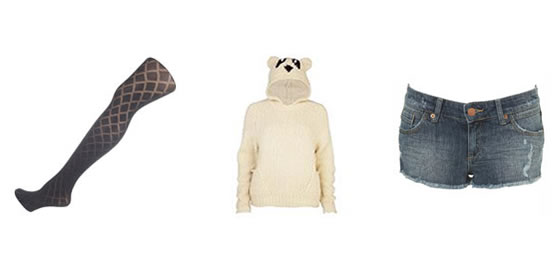
Kitsch - no longer are those teddy bear knits considered 'bad taste'. Some people may see this image as child like but there's no denying its wintery cuteness. Knitted animal hats and jumpers are the favourite of  this style and they can look great with a pair of patterned tights. The perfect winter warmers. Get the look: Diamond Print Tights from Dorothy Perkins £5.00, Panda Hood Knitted Jumper from River Island £49.99, Vintage Destroyed Hotpants from Topshop £22.00.


Items

Fairisle Knits - garments of this particular knitting technique come into fashion almost every winter and it appears the older the fashion gets the bolder it becomes. Walk into pretty much any high street store and there will be a whole section of the shop floor dedicated to these kooky but clever designs. Pick of the best: Snowflake Short-sleeved Jumper from New Look £19.99, Waterfall Cardigan from Miss Selfridge £36.00, Knitted Dress from Jane Norman £35.00.


Materials

Faux Fur - this material often causes a division of opinions. Although it cannot provoke animal rights campaigns, it can attract both negative and positive views. Perhaps the most popular faux fur garment this season is the gilet, but there are plenty of other options to choose from. For something more subtle try a faux fur trimmed hood. Pick of the best: Belted Gilet from Topshop £80.00, Fur Trimmed Hood Parka from River Island £79.99, Leopard Print Jacket from Zara £39.99.


Patterns/Prints

Leopard Print - it would appear as though leopard print is never going to grow out of fashion. It remains to be popular amongst girls and women of all ages, and can be worn throughout any season. As long as you don't dress from head to toe in the print, it's guaranteed you can't go wrong. Pick of the best: Leggings from boohoo.com £8.00, Poncho from Wallis £30.00, Ruffle Blouse from Oasis £30.00.


Colours

Camel Tones - this collection of colours consists mainly of a range of brown tones and shades. Items can easily be teamed with creams and some shades of green. If you're feeling slightly more adventurous try pale pinks.

Tuesday, 5 October 2010

The Social Stigma of Size Zero

For a while now, size zero has been under the spotlight in the media and recently, negativity has surrounded models of a slighter weight.

Size zero (UK size 4) was often paraded down catwalks and runways in notorious Fashion Capitals. To begin with skinny was what everyone wanted to be; the skinnier the better, in some peoples' eyes. However, views have now changed, which has resulted in disagreement with, and to some extent, disgust at, the use of size zero models within the industry. There has been something of an uproar at the promotion of such a small size which has been criticised for causing many larger girls, in particular teenagers, to follow drastic diets which have sometimes lead to bulimia or anorexia.


Tiny Charlotte Carter on the catwalk

In 2007, model Charlotte Carter was banned from the London Fashion Week catwalk after being branded ‘too thin’. She was told by her agency that she had an unhealthy appearance. At a height of 5 foot and 10 inches, Charlotte should have been weighing around ten and a half stone, which is the ideal weight for a female of this height. She was thought to have weighed somewhere in the region of 7 stone to maintain her size zero figure. She admitted to having suffered from an eating disorder since being a teenager.

Body Mass Index Chart

But should this mean she is banned from the catwalk? And who decides what is ‘too thin’ or ‘too fat’ for the fashion industry? Initially it is agencies who decide which models are chosen to display clothes on a catwalk. However, it’s really the media who makes judgement on what sizes and figures are appropriate for the public eye. If newspapers or television give a bad representation of larger women, young girls will feel it necessary to diet so that they do not look this way. However, if the media then decide to show smaller built people in a negative light, girls will feel the need to gain weight so that their appearance mirrors that of what is popular at the current time.

Recently, pressure has been mounting to enforce a total size zero ban. A few weeks ago, Madrid made sure that all ‘unhealthy looking’ mannequins were barred from its annual fashion week, with London being strongly urged to follow suit. Anyone found to have a BMI (Body Mass Index) of 18 or below would not be allowed to take part in any runway shows. It is alleged that two of Mark Fast’s design team quit after he challenged the size zero obsession, choosing instead to parade his knitwear on size 12 and 14 models at the London Fashion Week.

Size 12 modelling Mark Fast's 'bodycon' dress

So, everyone has their own opinion on what looks good: large or small, slight or curvy. However, this opinion will always be influenced by the media, whether we are aware of it or not. The issue of size zero will cause controversy for many years to come, but people are who they are.

Wednesday, 22 September 2010

High Street vs. Designer

  From Versace to Armani, many people wonder what all the hype surrounding designer labels is about, to some extent, myself included. But are they correct to wonder? With popularity of High Street stores such as Topshop and River Island rocketing, are designer brands and boutiques really any match for these persistent, reasonably priced retailers? Take this item for example...


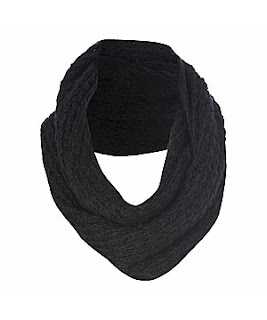
  Hooded scarves ('Snoods') are set to become fashion must-haves over the Autumn/Winter 2010/11 Season. This particular item costs £195 when purchased from the Dolce & Gabbana official website. The design of the knit is basic, and not difficult to produce cheaply.


  This item is a very similar knit to that on the Dolce & Gabbana website, but can be bought for a fraction of the cost. New Look prices this 'snood' at a mere £7.99. There is little difference between the two items, visually; your purse would be the only indication of extravagance, which would have suffered a massive weight loss of 187 pounds (and 1 penny!). Where as many consider this to be an unneccessary indulgence, there are plenty that don't.

  So what is it that makes people decide that they would rather pay almost 25 times the price for practically the same item? Perhaps status? Money is often thought to equal power, and walking around sporting a D&G scarf may assist the particular individual in feeling superior amongst a  high street clad crowd. Or maybe it could be insecurity about the way they look? If they lack confidence, they may feel the need to showcase expensive clothes to enable them to feel better about themselves. There are many minor psychological or slightly egotistical reasons as to why people may choose designer over high street labels. However, if you look at the facts, designer garments are often much more likely to be higher quality and therefore better value for money.

  There are a couple of things to consider when declaring items 'worth the money'. Firsty, how well they fit. If you are going to splash out the cash on designer clothing, you need to make sure they are the exact fit you are looking for, whether it be snug or loose. Just under a month ago I was on Oxford Street in London and decided to pay a visit to Selfridges. It was there I found this Tuelle cami dress, also from D&G.


  The dress, in store, was available in sizes 8, 10, and 12. It could also be purchased at a size 4, 6, and 14, and although these sizes were not currently held in store, they were not difficult to get hold of. This shows how diverse designer brands can be, as it offers sizes for smaller frame and somewhat curvier ladies, while also caters for every size in between. This enables women of many sizes to fit perfectly into this little black number.

  Secondly, an item must be very well designed and made in order for it to be worth its price label, down to every tiny, intricate detail. When spending a large amount of money, you would naturally want to be assured that the quality of the item is the highest possible. In hindsight, this dress should last you many, many years without developing any faults such as stitching become loose. When compared to high street labels, it is likely that the much more expensive items would last substantially longer than their inferiors.

  So... next time you hit the shops, if you're an indulgent spender, maybe try becoming a high street convert for the day and seeing what bargains you can bag yourself. If you swear by Primark, try treating yourself to something a little more upmarket for a taste of the glamorous lifestyle. Who knows what you might learn?